
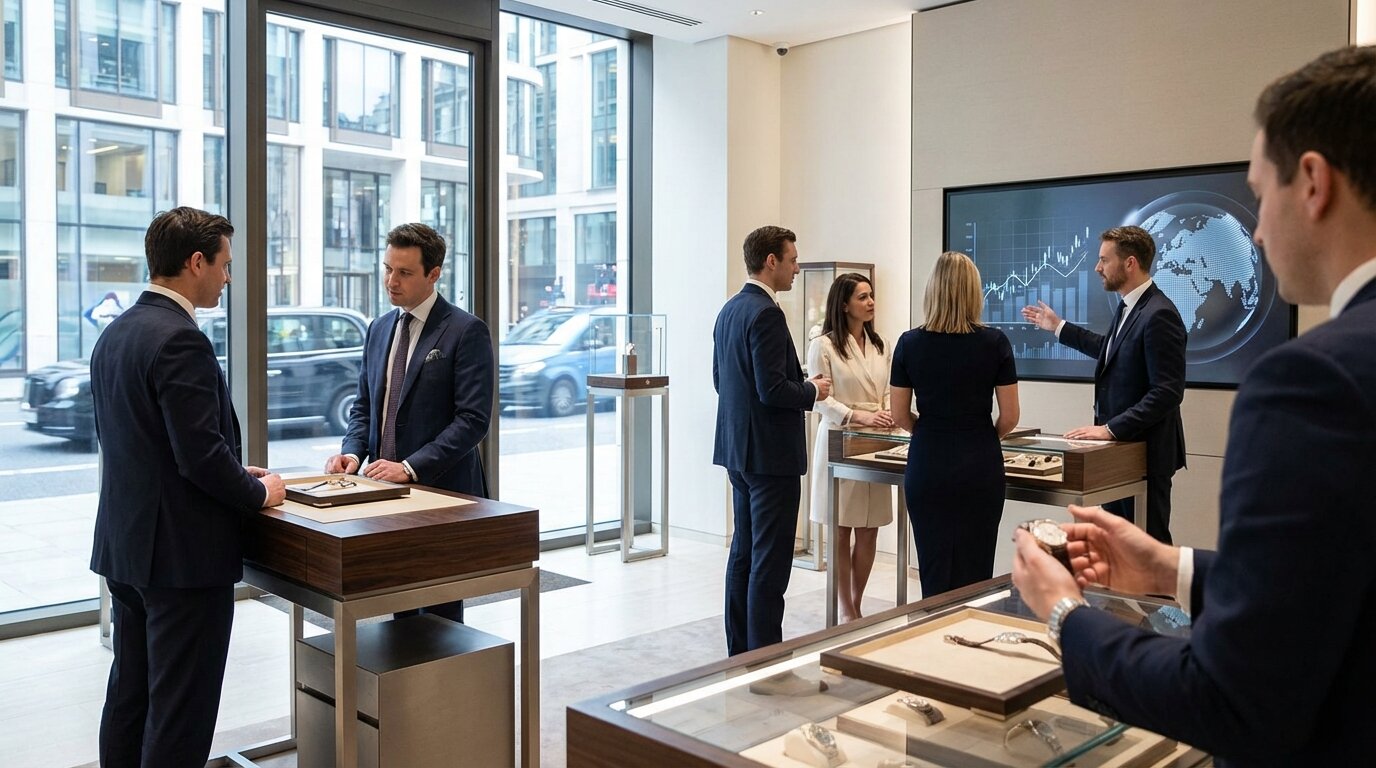
A 2026 view from the shop floor
Patek Phillippe is being discussed in London as if it’s a currency. That is the mood around Patek Philippe watches in 2026.
Clients still want the old signals of status. They also want less noise. The best maisons have noticed.
Luxury in 2026 is not about shouting. It’s about access, service, provenance, plus the confidence to wear something only insiders recognize.
Patek Phillippe and the price question in 2026
Anyone selling high watchmaking in the UK has had the same conversation since January 2026. Price rises are no longer a rumor. They’re a planning assumption.
The trade chatter points to mid single digit uplifts across many Swiss houses. I would budget for 5% to 9% across core references by late spring 2026. That feels consistent with the tone of commentary circling retailer briefings.
Patek Phillippe sits in a slightly different pocket. Demand is still being rationed through allocations. That gives the brand more freedom to adjust list prices without killing momentum.
A steel sports piece that lists at £25,000 can easily become £26,500 after a tidy increase. A precious metal complication listed at £90,000 can push towards £97,000 with the same percentage move.
For context, the best public discussion of watch pricing behavior going into 2026 is still found in industry editorials. See Hodinkee for market framing. See SRK Haute Horlogerie for the kind of price rise talk collectors are circulating.
Why UK buyers feel it more sharply
UK clients see the number on the tag. They also feel the knock on effect in part exchange values.
A list increase can lift pre-owned asking prices for the “clean” examples. It can also narrow premiums when the wider market goes soft. Both can be true in the same month.
Patek Phillippe buyers in Mayfair have become more tactical. They ask for full cost of ownership. They ask about servicing, straps, plus insurance valuations.
The Nautilus anniversary and what Patek Phillippe might actually do
The 50th anniversary of the Nautilus lands in 2026. That matters even for collectors who pretend they’re bored of the conversation.
Anniversary years tend to bring commemorative details. The sensible money is on subtle dial work, case finishing tweaks, plus a small run of boutique led pieces. Grandstanding would be out of character.
If you want a read on the speculation, start with The Luxury Hut. It tracks the kind of predictions that dominate WhatsApp groups, then it grounds them in how the brand usually behaves.
Patek Phillippe doesn’t need to “save” the Nautilus. It needs to manage the secondary market heat without looking like it’s feeding it.
What I expect to see at Watches and Wonders 2026
April 2026 is the moment the industry watches. Geneva will be full of forced smiles, then everyone will study the product photos like forensic accountants.
I expect at least one Nautilus reference with a dial color that photographs well in low light. I also expect at least one piece that makes far more sense in person than online.
A true volume play is unlikely. Patek doesn’t chase volume. It protects waitlists as a feature, not a problem.
Quiet money has changed the brief
Patek Phillippe is the default answer for clients who have done the loud watches already. The shift in 2026 is that even first time buyers want understatement.
There’s a practical reason for this. Wearing a hyped steel sports watch in a West End restaurant now attracts the wrong attention. That changes buying behavior.
This is also where luxury watch brands have split into two camps. Some lean into flash. Others lean into discretion, then they charge more for it.
Patek Philippe history helps here. The brand has always sold taste. It sells family logic, not influencer logic.
The new luxury signal is documentation
Documentation has become part of the product. Clients ask about extracts, original sales receipts, plus service papers.
Patek Phillippe benefits because its archival culture is taken seriously. It also benefits because its watches tend to live in safes with better paperwork.
Even the language has changed in 2026. Clients say “complete set” more than they say “mint”. That’s a healthier obsession.
Patek Phillippe models that define 2026 in real terms
Most people talk about one or two sports lines. The working reality is broader. The clever clients build a small group across dress, travel, plus calendar complications.
Patek Phillippe doesn’t need to flood the market with novelties. It needs a coherent set of references that feel inevitable when you try them on.
Here is how I see the year shaping up across key Patek Philippe models. Prices are typical UK retail levels seen in 2026 conversations. Exact lists vary by configuration.
| Family | What buyers want in 2026 | Typical UK list range | Typical immediate market premium |
|---|---|---|---|
| Nautilus | Bracelet comfort, anniversary detail, strong dial legibility | £55,000 to £95,000 | 10% to 40% |
| Aquanaut | Daily wear practicality, travel time function, rubber strap versatility | £22,000 to £60,000 | 15% to 55% |
| Calatrava | Thin cases, precious metal warmth, quiet dial design | £25,000 to £55,000 | 0% to 15% |
| Complications | Annual calendars, world time, practical grand complication stepping stones | £45,000 to £160,000 | 0% to 20% |
Patek Phillippe clients are also looking harder at precious metal sports pieces. The sticker shock is real. The wearability is often better than steel once you live with it.
Don’t ignore dress references in 2026. The market has become less hysterical. That makes value easier to find for people who care about the watch itself.
What I would avoid this year
I would be cautious with tired pre-owned examples offered as “investment grade”. If the polishing is heavy, then the value story collapses.
I would also be wary of buying purely off a forum narrative. Try the watch on. Look at it in grey daylight, then decide.
After-sales is where the modern luxury battle sits
Patek Phillippe sells longevity. The test is whether service capacity keeps pace with demand in 2026.
Clients now accept that proper work takes time. They don’t accept silence. Communication is the product.
In practical terms, I see routine service quotes in the UK landing around £1,200 to £3,500 depending on complication. More involved work can push higher. That’s not scandalous. It’s the cost of doing it correctly.
A watch that’s worn hard also needs straps, clasps, plus pressure testing. Those smaller line items are where budgets get surprised.
What good looks like in 2026
Good after-sales means clear lead times. It means written estimates. It also means returning replaced parts when policy allows.
It also means advice that isn’t sales coded. If the watch can wait until autumn 2026 for service, then a decent adviser should say so.
Patek Phillippe is well placed here because the brand story supports the slow craft narrative. The risk is that clients start to compare service experiences across competitors more openly.
The pre-owned reality check and Patek Phillippe investment talk
Patek Phillippe is still treated like a store of value. The smarter reading in 2026 is more nuanced.
There are pieces that behave like assets. There are also pieces that behave like cars. They drop once you drive them, then they stabilize.
The phrase Patek Philippe investment is useful only if you define the horizon. A six month flip depends on hype. A ten year hold depends on condition, rarity, plus paperwork.
In the UK at the moment, I see many dealers more willing to negotiate than they were at peak frenzy. Premiums have not vanished. They’ve become selective.
Numbers that matter more than the headline auction results
Ask for a timegrapher reading. Ask for a water resistance note if it’s meant to be worn near water.
Check bracelet stretch. Check clasp sharpness. These details separate a strong buy from a future regret.
Patek Phillippe buyers who do this homework end up happier. They also tend to keep the watch longer, which is the point.
Where the wider industry is heading in 2026
There are two big forces shaping watches in 2026. First is pricing pressure across Swiss supply chains. Second is a more informed buyer who expects transparency.
You can see the anniversary driven calendar across the wider market in 2026 previews. Two solid examples are Monochrome Watches plus Outlook Luxe.
Patek Phillippe sits above most of that noise. It still needs to react to buyer expectations around traceability, then it needs to do it without turning into a tech brand.
Among luxury watch brands, this is the fault line. Some will chase novelty. Others will refine the same reference quietly for a decade.
- Clienteling feels more private in 2026. Less mass email. More appointment only.
- Materials are discussed with more honesty. Expect fewer vague claims.
- Allocation politics remain. The difference is that clients talk about it openly.
- Smaller case comfort is back. It suits suits, then it suits real life too.
Patek Phillippe does well when taste moves away from excess. 2026 is shaping up that way.
If you are buying in 2026 with a UK budget
I get asked the same question on Bond Street. “What would you buy with £30,000?” It’s a fair number because it forces discipline.
Patek Phillippe may not be realistic at that exact figure at retail for the most chased lines. Pre-owned can make it workable. Dress pieces also bring it within reach.
Here is a practical shortlist I would consider in 2026. It assumes you want to wear the watch, not just store it.
- Pre-owned Calatrava with full set. Fewer complications. Better daily peace of mind.
- Aquanaut on strap only if the condition is sharp. Walk away from soft cases.
- A simpler complication like an annual calendar if you value mechanics over hype.
- A competing dress icon from a top maison. Use it as a control group for value.
My bias is simple. Buy the watch you will still want in December 2026 when the noise has moved on. That is where Patek Phillippe keeps winning.