
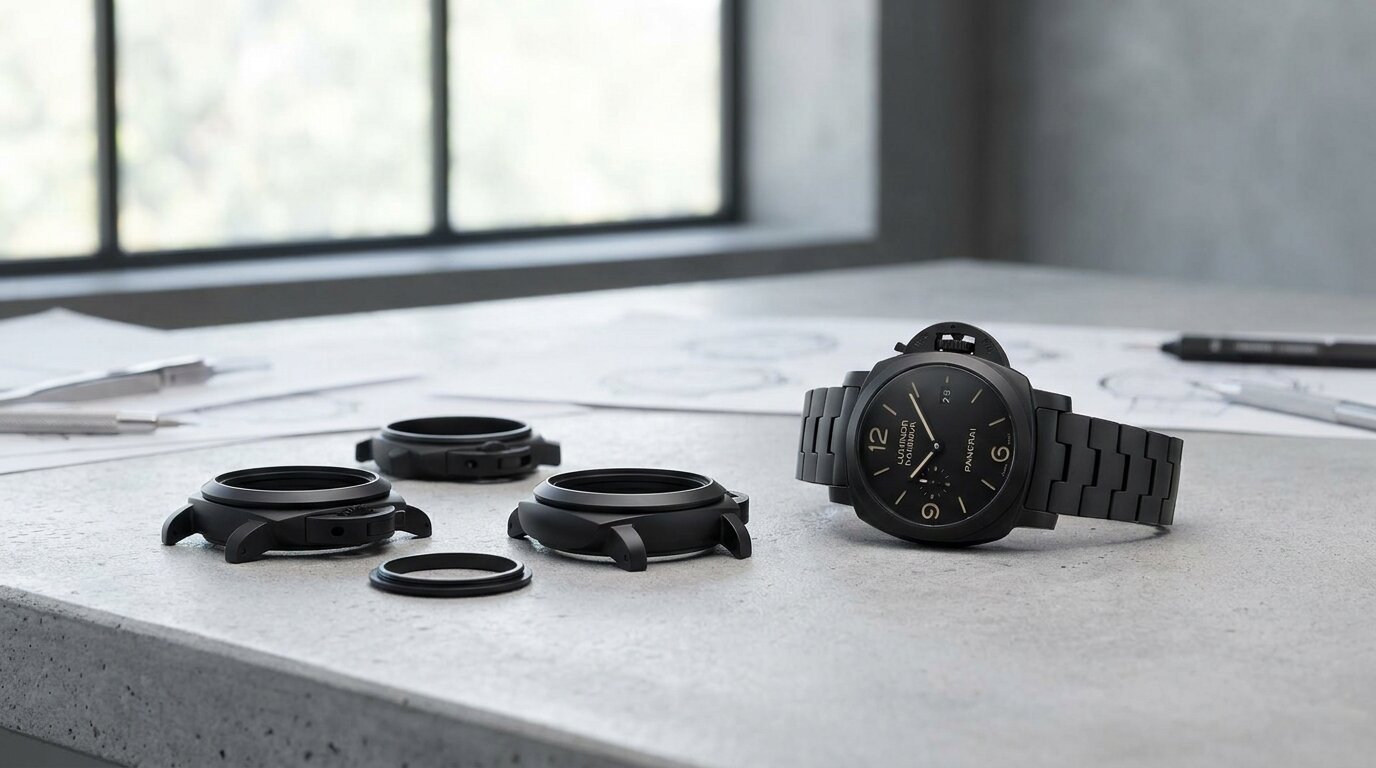
Ceramic is no longer a sideshow at Panerai
Panerai Watches have always looked like tools, even when the price tag says otherwise. In 2026 the conversation is really about Panerai watch materials, with ceramic now sitting at the centre of the range.
I see it weekly in Mayfair. Clients who used to default to brushed steel now ask for black cases first. They want the stealth look without babying the watch.
This is also where luxury Panerai watches have shifted. The pitch isn’t just heritage. It’s wearability, scratch resistance plus a very deliberate modern mood.
Why Panerai Watches needed ceramic in the first place
There is a blunt reason. Big cases show wear fast. A polished bezel on a 44 mm watch collects desk rash within weeks. That doesn’t flatter the brand at £10,000 plus.
Panerai Watches also trade on a military silhouette. Ceramic lets Panerai push a darker, more tactical aesthetic without coatings that can wear through.
Then there’s comfort. Ceramic can feel warmer than steel on first contact. It also avoids the cold shock you get on a winter morning outside Green Park.
Panerai’s adoption was never just about fashion. It was about solving real retail objections that came up at the counter.
- Scratch resistance for the bezel and case flanks
- Lower visual shine for buyers who dislike polished steel
- Less day-to-day corrosion anxiety near salt water
- Colour that stays consistent across the case
Ceramic in practice: what you gain, what you risk
Ceramic in modern watchmaking is typically zirconia based. It’s extremely hard once sintered. A useful reference point is Vickers hardness. Ceramic can sit around 1,100 to 1,300 HV. Many steels sit nearer 180 to 250 HV.
That hardness is why Panerai Watches in ceramic keep their fresh edges. It’s also why the surface stays tidy after a year of shirt cuffs plus laptop work.
Weight is the other quiet win. Zirconia ceramic has a density around 6 g/cm³. Typical stainless steel is near 8 g/cm³. That’s roughly 25% lighter on paper. It feels more than that on a thick strap.
Now the sceptical bit. Ceramic isn’t “tough” in the way steel is tough. It resists scratches. It can still chip if you clip a granite worktop. A hard knock at the wrong angle can be expensive.
Panerai Watches buyers need to be honest about lifestyle. If your week includes site visits, moving kit, gym lockers plus careless door frames, ceramic needs thought. It’s not fragile. It’s simply less forgiving than steel.
How Panerai Watches execute ceramic cases without making them feel cheap
The process starts long before finishing. Ceramic is made from fine powder mixed with binders. It’s formed into a “green” part that is oversized. It then goes through high temperature sintering.
During sintering the part shrinks. A typical shrink rate is around 20%. Any inconsistency can warp a lug or distort a bezel seat. That’s where scrap rates climb. Those losses are part of why ceramic cases cost more.
Panerai Watches also need crisp geometry. The crown guard isn’t optional. It’s a signature. It means tight tolerances around the lever, the pin plus the crown tube.
After sintering, ceramic needs diamond tooling for machining. You can’t cut it like steel. Finishing is also more deliberate. A matte “stealth” look usually comes from micro blasting. A glossy black look needs polishing that is slow and unforgiving.
Expect a mix of materials even on a ceramic piece. Casebacks are often titanium or steel for thread strength plus service practicality. That mix isn’t a compromise. It’s smart engineering.
Panerai ceramic models to know in 2026
Talk to any UK boutique team in 2026. They’ll tell you the same thing. The ceramic pieces don’t sit around for long when the configuration is right. Black case. Sandwich dial. Strong lume. Simple layout.
This is where Panerai ceramic models become a practical choice, not just a styling exercise. Many buyers want a daily watch that looks discreet. They still want presence on the wrist.
Panerai Watches in ceramic tend to work best when the dial stays clean. Complications are fine. The design has to keep the Panerai legibility.
Below is a realistic snapshot of typical UK boutique pricing in 2026. It changes by strap, limited runs plus precious metal content. Treat it as a range, not a promise.
| Model family | Case | Typical UK boutique price in 2026 | Who it suits |
|---|---|---|---|
| Luminor GMT Ceramica | Black ceramic, 44 mm | £11,500 to £13,500 | Frequent travellers who still want a clean dial |
| Luminor Marina Ceramica | Black ceramic, 44 mm | £9,800 to £12,000 | Daily wear buyers who hate bezel scratches |
| Luminor Chrono Ceramica | Black ceramic, 44 mm | £14,500 to £18,500 | Collectors who want wrist presence with a darker tone |
| Radiomir Ceramica | Black ceramic, 45 mm | £10,500 to £14,000 | Strap focused clients who prefer wire lugs |
Those numbers put ceramic firmly inside the mainstream of luxury Panerai watches. The premium is noticeable. The day-to-day experience can justify it.
The Panerai watch features that make ceramic feel intentional
Ceramic only works if the rest of the watch keeps up. The dial finishing must not look flat. The lume has to pop. A dark case with weak lume feels dead.
Panerai Watches generally get this right through strong contrast. Matte black ceramic pairs well with bright markers plus a simple minute track. It’s a very Panerai sort of confidence.
Straps matter more than people admit. Ceramic looks best on black rubber for a proper sport mood. It also looks excellent on dark brown leather when you want warmth against the black case.
Another detail is how the case surface meets the crown guard. On cheaper ceramic watches you see soft edges that look moulded. On a good one you see sharp transitions. That’s the difference between “black watch” and “black toy”.
If you’re comparing pieces in person, prioritise the tactile checks. Run a finger along the lug edge. Check the lever action. Look for clean transitions where different Panerai watch materials meet.
Living with ceramic Panerai Watches in the UK
Ceramic rewards calm ownership. It shrugs off scratches that would ruin a polished steel case. That’s the upside you notice every day. It stays looking new.
The downside is impact risk. I always tell clients the same thing. Don’t treat ceramic like steel on a building site. Avoid knocking it against tile or stone. Insurance isn’t glamorous. It’s sensible at these prices.
Panerai Watches servicing isn’t more complex just because the case is ceramic. The movement service remains the movement service. Case part replacement can be the sting. A chipped case isn’t a quick polish job.
Resale is also nuanced in 2026. The best ceramic pieces can be easier to sell because condition photographs well. A tired steel bezel shows instantly online. Ceramic hides nothing because it stays crisp when it’s healthy.
Just don’t confuse “no scratches” with “no wear”. Check the clasp. Check strap condition. Look for hairlines on any metal caseback.
If you want to buy Panerai watches in ceramic, do it with your eyes open
If you plan to buy Panerai watches this year, start with wrist time. Ceramic can feel different. Some people love the warmer touch. Others miss the heft of steel.
Panerai Watches are also easy to get wrong if you chase hype. Choose the dial you’ll still like on a grey Tuesday. Black ceramic is a statement. It needs to fit your wardrobe plus your work life.
Stick to authorised routes when possible. In the UK that usually means a Panerai boutique, Harrods, Selfridges, Watches of Switzerland, Goldsmiths plus other established jewellers. You want clean paperwork. You want the warranty to be straightforward.
Start your research with the brand site. Then check stock with UK retailers.
Ask direct questions before you pay. Is the case fully ceramic or a ceramic coated metal case. What is the replacement cost of the bezel. How long is the wait for parts in 2026.
Panerai Watches in ceramic are brilliant when they match the owner. They’re not a universal upgrade. They’re a specific flavour.
That is the real “ceramic revolution”. It’s not about showing off a new material. It’s Panerai removing friction from daily wear. It also keeps the look sharp on the wrist. That matters when the starting price is five figures in pounds.