
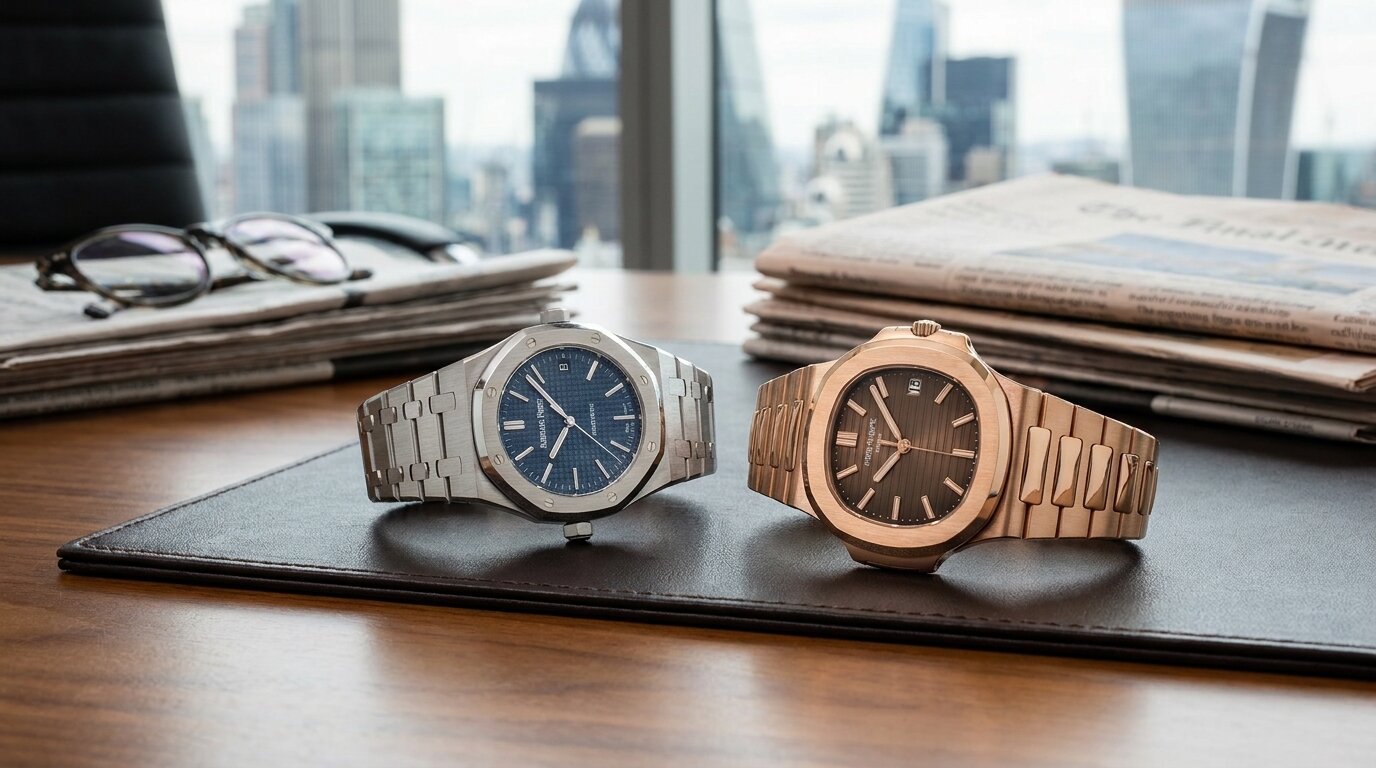
Audemars Piguet vs Patek Philippe: a UK market read for 2026
Audemars Piguet is still the watch brand that makes UK buyers speak in hushed tones on Bond Street. In 2026, Audemars Piguet watches sit at the sharp end of demand, plus the sharp end of dealer patience.
This is not a taste debate. This is a money and access debate. It’s also about what you can actually buy in Britain without being treated like a time waster.
Patek Philippe remains the quieter flex. The UK market rewards that restraint, then punishes anyone who expects an easy purchase.
Where the UK luxury watch market sits in 2026
Walk into Mayfair in May 2026. You’ll see fewer “available today” pieces in the windows. You’ll see more appointment-only conversations behind the glass.
Audemars Piguet demand is still driven by a small group of stainless steel sports references. Patek Philippe has the same problem. The difference is how each brand manages the queue.
In the UK, the authorised network feels tighter than it did even a year ago. The mood is cautious. A lot of buyers are also comparing against jewellery spend at Harrods, then trying to negotiate watch access with it.
Grey dealers in Hatton Garden have adapted. They now talk about liquidity like traders. They quote premiums with straight faces. They also move fast when sterling moves.
Audemars Piguet in Britain: who buys it, plus why
Audemars Piguet attracts a specific UK customer in 2026. They want modern design. They want immediate recognition in a private members club. They also want a bracelet that feels like hardware.
The brand’s UK buyer profile is younger than Patek’s average. That shows up in what gets asked for. Royal Oak and Offshore requests dominate. Code 11.59 interest is rising, though it remains a harder sell at full retail.
Audemars Piguet history matters here, even when buyers pretend it doesn’t. The story gives permission to spend big on a steel sports watch. It also reassures buyers who worry they’re paying for hype alone.
The UK market also likes personalisation. Straps. Quick swaps. Boutique experiences. Audemars Piguet leans into that more openly than Patek Philippe does.
A few shop floor tells in 2026
- Steel sports pieces get requested first
- Full sets matter more than “a good story”
- Condition grading has become stricter
- Bracelet stretch is now a deal breaker
Patek Philippe in Britain: the softer voice with the harder gate
Patek Philippe plays differently in the UK. The tone is discreet. The clienteling is even more selective. It can feel almost old fashioned, in a way some buyers love.
Most UK customers still chase Nautilus and Aquanaut. That chase has distorted everything else. Calatrava and complicated dress pieces are easier to discuss. They’re not always easier to buy at the “right” price.
Patek also benefits from multi-generation collecting. You see it in Edinburgh. You see it in Cheshire. You also see it in central London families who treat watches like heirloom assets.
The British buyer who prefers Patek often wants a lower profile daily watch. They also want finishing that reads as craft, not shine.
Audemars Piguet comparison on design, wear, plus brand signal
If you’re doing an Audemars Piguet comparison in 2026, start with the case and bracelet. Audemars Piguet wears flatter than many expect. The bracelet integration makes it feel like one object.
Patek Philippe tends to sit lighter on the wrist in comparable categories. The finishing can look softer in natural light. It often feels less “industrial” than Audemars Piguet. That difference is the point for many buyers.
In the UK, the social signal matters. Audemars Piguet reads as modern success. Patek reads as established wealth. Those are stereotypes, yet they influence resale behaviour in London.
Bracelet comfort is where many buyers pick sides. Some Royal Oak bracelets feel like jewellery. Some Patek bracelets feel like a dress watch solution to a sports watch problem.
Audemars Piguet features UK clients notice first
Audemars Piguet features are not subtle. The bezel geometry is the headline. The finishing contrast is the hook. The dial texture does a lot of work in low light bars.
UK buyers also talk about thickness more than they used to. A shirt cuff test matters at work lunches. It matters again at black tie events. It also matters when you try to wear the watch five days a week.
Patek Philippe wins on micro finishing under a loupe. Audemars Piguet wins on presence from two metres away. That’s the real split, even if nobody says it out loud.
Audemars Piguet pricing in the UK: retail reality vs grey reality
Audemars Piguet pricing in 2026 is a two-tier conversation. Boutique retail is one number. UK grey market asking is another number. The gap changes month to month.
In April 2026, typical UK grey premiums on hot steel Audemars Piguet references often sit around 15% to 35%. Some pieces break that range when supply tightens. Some drop below it when buyers get spooked.
Patek Philippe premiums can be higher on the most chased sports models. That said, the buyer pool can be pickier. The market is less forgiving on polishing, then less forgiving on missing links.
Below is a practical table for a UK buyer. These are the kind of numbers you’ll hear quoted in Hatton Garden in 2026. Treat them as working ranges, not promises.
| Brand | Model family | Typical UK retail range (2026) | Typical UK grey asking range (2026) | Buyer friction in the UK |
|---|---|---|---|---|
| Audemars Piguet | Royal Oak 41mm steel | £25,000 to £33,000 | £34,000 to £50,000 | High. Relationship heavy. |
| Audemars Piguet | Royal Oak Offshore | £30,000 to £45,000 | £28,000 to £55,000 | Medium. Model specific demand. |
| Audemars Piguet | Code 11.59 | £25,000 to £55,000 | £18,000 to £45,000 | Lower. Value driven buyers. |
| Patek Philippe | Nautilus steel | £30,000 to £45,000 | £70,000 to £120,000 | Very high. Allocation is brutal. |
| Patek Philippe | Aquanaut | £22,000 to £35,000 | £45,000 to £85,000 | Very high. Waiting talk never ends. |
| Patek Philippe | Calatrava | £25,000 to £40,000 | £18,000 to £45,000 | Medium. Easier entry point. |
Audemars Piguet sits in a slightly saner place than Patek on the most extreme premiums. That doesn’t make it easy. It just makes it less surreal.
If you’re buying in the UK with travel in mind, remember VAT handling can trip you up. Get the invoice right. Make sure the serial and reference match. You don’t want paperwork drama later.
Availability in the UK: boutiques, authorised dealers, plus the real waiting game
Audemars Piguet has leaned hard into boutiques. In Britain, that changes the access dynamic. You’re dealing with a brand environment, not a multi-brand counter.
Patek Philippe is still more tied to authorised retail partners. That can be an advantage for buyers who already spend across jewellery. It can also feel like a closed shop if you’re new.
In 2026, you’ll still hear the word “list” used casually. Treat it as a polite fiction. Allocation is about profile. Spend history helps. Enthusiasm helps less than people think.
Audemars Piguet also tracks buyer behaviour more tightly than most. Flip risk is taken seriously. If you want to buy grey later, that can be a cleaner route. It can also be far more expensive.
Running costs in the UK: servicing, insurance, plus aftersales confidence
Servicing is where the romance ends. Audemars Piguet service costs in the UK can surprise first-time buyers. Complex cases take time. Integrated bracelets can add cost if parts are needed.
Patek Philippe servicing is rarely cheap. It often feels more predictable. The brand’s aftersales tone is clinical. That can be reassuring. It can also feel cold.
Insurance is non-optional at these values. In 2026, many UK insurers want fresh valuations. Expect them to ask for a detailed description. They may ask for purchase proof plus photos.
My retail view is simple. Buy from a source that’ll still answer the phone in three years. That matters more than saving £1,500 today.
Resale and liquidity in 2026: what actually moves in the UK
Audemars Piguet resale is strong when you stick to the obvious pieces. Steel Royal Oak remains liquid in London. It’s also liquid in Manchester, especially for full set watches with clean case lines.
Patek Philippe sports models still trade like trophies. That brings risk. It also brings scrutiny. UK buyers in 2026 are better educated. They ask harder questions about dial originality.
Dress Patek can be a value play. It can also be dead stock if you choose badly. Audemars Piguet dress-leaning pieces can be even harder, unless you buy them for yourself only.
Watch out for soft factors that hit UK resale. Over polishing hurts. Aftermarket parts hurt more. Missing links can cost £500 to £2,000 to correct in a hurry.
Authenticity checks in Britain: how buyers get caught out
Fraud is no longer a side issue. In 2026, super clones are good enough to fool casual buyers. Audemars Piguet is heavily targeted. Patek is targeted even more.
UK buyers often rely on “a mate who knows watches”. That’s not a process. Use proper verification. Use brand service routes where possible. Use reputable specialists who stand behind their checks.
If you buy grey, insist on a written guarantee. Ask for timegrapher readings. Ask for high resolution movement photos where sensible. Walk away if the seller gets defensive.
For official references, start here. Use the brands’ own channels. Don’t expect them to authenticate everything for free, though.
So which wins for a UK buyer in 2026
If you want presence, choose Audemars Piguet. If you want discreet finishing plus long-term collector approval, choose Patek Philippe. That’s the cleanest way to frame it.
My stance is mildly sceptical of hype buying. Audemars Piguet can still be a brilliant daily watch. It can also be a very expensive way to chase approval. Patek Philippe can be even worse for that.
For most UK buyers, the smart move is to decide your use case first. Office daily wear points to Audemars Piguet in steel or a calmer Code 11.59. Formal wear points to Patek dress pieces that sit under a cuff.
If you’re trying to “beat the market”, you’re late. Buy the watch you’ll wear. Buy from the cleanest source you can afford. Audemars Piguet will still feel special in 2026 when you choose it for the right reasons.