
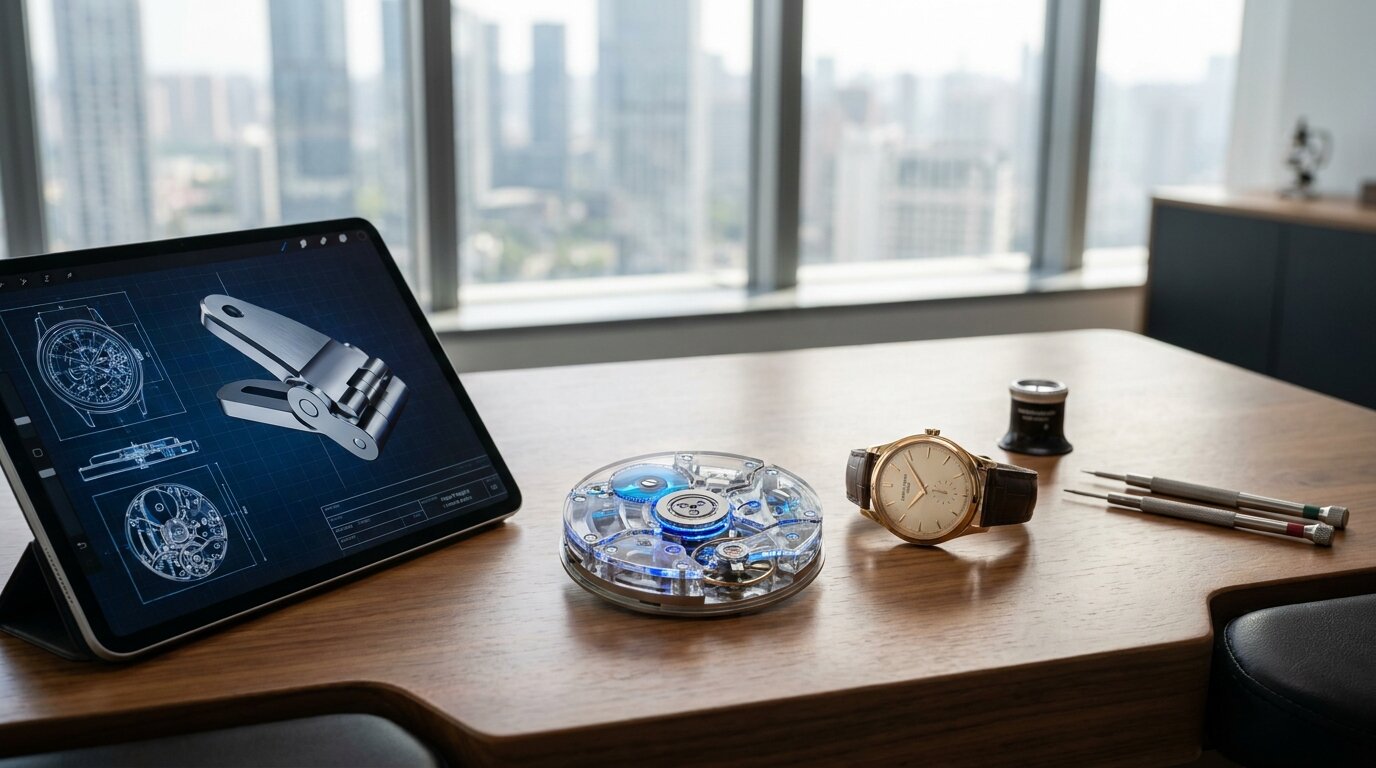
Why 2026 feels like a hinge moment for Patek Phillippe
Patek Phillippe sits in a strange place in 2026. It’s still the reference point for Patek Philippe watches. Yet the conversation has shifted from pure scarcity to substance.
Collectors have grown fussier. They want proof of luxury watch innovations that will still matter when the fashion cycle moves on. Patek Phillippe has to answer that mood without chasing it.
In our experience, the most serious clients in London are less interested in hype. They ask about servicing timelines. They ask about parts policy. They ask whether Patek Phillippe is investing in movement science or just polishing the same story.
The good news is that the brand has form. The trick is separating genuine engineering from marketing fog. That’s where 2026 gets interesting.

Patek Phillippe and the quiet power of independence
Most high-end watch brands talk about heritage. Patek Phillippe talks about control. Independence gives it the freedom to move slowly. That can look stubborn. It can also look smart.
When a group demands quarterly fireworks, product gets weird. You see forced “limited editions” plus loud design swings. Patek Phillippe rarely plays that game. The firm’s own statement of priorities is clear in its official values pages. See Patek’s statement on independence and values.
That matters for innovation. Materials research needs patience. Escapement experiments need years of testing. Patek Phillippe can fund those programmes without begging for quick wins.
Independence also shapes aftersales. The brand protects long-term serviceability because it protects its name. In 2026, that’s a bigger competitive edge than another dial colour.
Reading Patek Philippe history without nostalgia goggles
Most readers know the headlines of Patek Philippe history. It’s a maison built on complications, finishing plus conservatism. That summary is accurate. It’s also incomplete.
The real thread is a pattern of selective change. Patek Phillippe tends to adopt new techniques only when they can be industrialised to a high standard. It avoids shortcuts that weaken long-term reliability. That attitude comes through in independent write-ups of the brand’s development. A solid primer is this overview of Patek Philippe’s legacy of innovation.
Another useful read is this collector-facing history guide. It captures something retail often forgets. Patek Phillippe didn’t become desirable because it was rare. It became rare because people decided it was the benchmark.
In 2026, that benchmark status is challenged by taste. Clients want more comfort in sports cases. They want better magnetism resistance. They want less fragility in complicated calendars. Patek Phillippe can’t rely on history alone. It has to make the next chapter believable.
Patek Phillippe technology in 2026: what “Advanced Research” really signals
Patek Phillippe uses the phrase “Advanced Research” with care. It’s not a slogan. It’s a window into how the brand thinks about progress. Start with the official page. Read it slowly. See Patek Philippe Advanced Research.
This is the heart of Patek Philippe technology as clients actually experience it. Better isochronism is not a dinner-party story. It shows up months later when a watch still holds stable rate on the wrist. Improved lubrication behaviour is boring. It reduces service drama.
Patek Phillippe has also been willing to explore silicon-based components where they make sense. The point is not gimmickry. The point is consistency at microscopic tolerances.
| Innovation thread | What it targets | What to watch for next at Patek Phillippe |
|---|---|---|
| Escapement geometry | Rate stability across positions | Incremental efficiency gains plus longer stability between services |
| Material science | Wear, magnetism, ageing | New alloys plus composites used only where serviceability stays high |
| Energy management | Power reserve under real wrist use | Smarter torque curves in complicated pieces without thicker cases |
| Manufacturing control | Repeatability at scale | Tighter tolerances that still allow hand finishing where it matters |
Patek Phillippe won’t become a tech start-up. It will keep its pace. In 2026, that pace looks like quiet engineering plus fewer headline risks.

Materials in 2026: beyond steel and beyond silicon
Clients ask about materials more than they did five years ago. They ask because they wear watches harder. They also live around magnets. Think phone cases, laptop speakers plus handbag clasps.
Patek Phillippe has historically been cautious here. That caution is sensible. Exotic materials can age badly. They can also create service nightmares if tolerances shift with temperature.
Still, the direction of travel is clear. Expect more research into anti-magnetic architecture. Expect smarter use of non-ferrous components. Expect case alloys tuned for scratch behaviour rather than pure hardness claims.
This is where luxury watch innovations stop being Instagram talk. In 2026, the buyer who actually wears a perpetual calendar wants shock tolerance. They want stable performance on the commute. Patek Phillippe has the resources to solve those problems. It also has the discipline not to announce half-baked answers.
The next decade of complications: slimmer, tougher, easier to service
The complication race is back. Not in the old sense of “most functions wins”. It’s about usability. It’s about a watch that survives real life without babying.
Patek Phillippe has a strong position here. The brand understands how to package complexity. The next step is making that complexity less temperamental. In 2026, that likely means better energy distribution. It also means calendar mechanisms that are harder to mis-set.
We see a retail pattern. Clients love grand complications. They fear living with them. They ask how often it needs to go back to Geneva. They ask what happens if they travel and forget the corrector tool. Patek Phillippe has an opportunity to design around those anxieties.
A thinner case is not only aesthetic. It also changes wearability. It can make a high complication feel like a daily watch. That’s the sweet spot for Patek Phillippe in 2026.

Bracelets, clasps, comfort: the innovation nobody posts about
Here is a blunt retail truth. A watch can be technically brilliant. It can still fail if it wears awkwardly.
Patek Phillippe has iconic sports references that clients chase. The challenge is that modern buyers compare them against very comfortable integrated-bracelet rivals. They also compare them against rubber straps that actually breathe.
Future-facing design work is likely to show up in small places. Micro-adjust systems that don’t look clunky. Clasps that sit flat. Better articulation at the end links. Patek Phillippe can improve these without touching its design language.
This is also a branding moment. Patek Phillippe doesn’t need to shout. It just needs clients to put the watch on and feel the difference.
Authentication and the digital layer: paperwork finally grows up
The 2026 buyer wants certainty. Not vibes. Authentication sits at the centre of modern collecting because the money is serious.
Patek Phillippe has every reason to lead here. A digital layer can support provenance without turning the watch into a gadget. Think secure records for servicing. Think controlled ownership updates. Think fast checks at auction viewings.
This is one of the few areas where Patek Philippe technology can become visible to non-nerds. It can also protect the secondary market. That market matters even when brands pretend it doesn’t.
If you want a broader watch-world take on how collectors talk about craft plus value, the tone of this short video is useful. See this watchmaking discussion on YouTube. It captures the mood shift towards substance.
Competition check: how high-end watch brands are pushing Patek Phillippe
Patek Phillippe doesn’t operate in a vacuum. The premium client cross-shops. They try on rivals in the same afternoon. They compare finishing. They compare bracelets. They compare how the watch makes them feel.
Look at the current heat around sports chronographs. Vacheron’s Overseas line keeps coming up in conversations. This quick hands-on clip of the 5520V nails why. See this Vacheron Constantin Overseas 5520V video.
Audemars Piguet remains the other constant. The Royal Oak effect is still strong in 2026. Many clients tell us they “just love an AP”. This short review of the 15400 captures that energy. See this AP Royal Oak 15400 clip.
That competitive set matters because it pushes expectations. Better lume. Better water resistance. Better anti-magnetism. Better ergonomics. Patek Phillippe won’t chase every spec line. It can’t ignore the comfort and daily-wear bar being raised by other high-end watch brands.

Independents as R&D labs: what Patek Phillippe can learn without copying
Independents are shaping taste in 2026. They do it through finishing standards plus scarcity. They also do it through storytelling that feels personal.
Recep Recepi is a good example. Many mainstream buyers have never heard the name. Collectors have. This short introduction captures the appeal. See this video on independent watchmaker Recep Recepi.
The lesson for Patek Phillippe is not to imitate an independent. That would look desperate. The lesson is to keep pushing finishing as a functional discipline. Sharp interior angles matter because they signal control. Consistency matters because it signals process.
There is also a market lesson. Limited production drives auction behaviour. Retail and collector pricing can diverge hard. Patek Phillippe already lives with that dynamic. It just does it at a larger scale.
Where innovation meets retail reality for Patek Phillippe in 2026
Now for the part buyers actually feel. Money plus availability. In 2026, Patek Phillippe still sits in a bracket where entry is not really entry.
Across UK retail, we typically see classic dress models beginning around £25,000 once you’re into current precious-metal territory. Sports models often start around £30,000 at retail. High-demand steel pieces can be higher on paper. Grand complications move quickly beyond £150,000.
Deposits vary by retailer. We often see 10% to 20% as a working range on special orders. Timelines are not promises. They’re estimates. Patek Phillippe allocations are still tight in 2026.
This is also where innovation becomes commercial. If Patek Phillippe can improve durability plus service intervals, it reduces ownership friction. That helps the client justify the outlay. It also helps the retailer keep long-term relationships healthy.

Buying for the future: how to spot real Patek Phillippe progress
Most marketing is noise. Real progress leaves fingerprints. Patek Phillippe tends to hide those fingerprints in technical notes plus in how a watch behaves after six months.
If you’re assessing future-facing Patek Phillippe pieces in 2026, look for signals that match the brand’s habits. You want improvements that reduce risk. You want changes that still allow service decades later.
- Documented movement updates that improve rate stability
- Better wearer comfort through case geometry plus clasp work
- Clear provenance support from the brand
- Finishing consistency across examples, not only press shots
Also keep perspective. Patek Phillippe is not a volume maker. That limits how fast it can roll improvements across the whole catalogue. It also protects quality control if the house stays disciplined.
If you’re building a broader collection, there’s nothing wrong with balancing a grail with daily pieces under £10,000. This short five-watch selection video shows how collectors think about utility. See this five-piece collection under £10,000 clip. It also highlights why Patek Phillippe tends to sit as the “destination” watch rather than the beater.
Frequently Asked Questions
Is Patek Phillippe still independent in 2026?
Yes. Patek Phillippe remains family-owned and independent in 2026. The brand frames this as central to long-term decision-making and investment in craft.
What makes Patek Philippe watches feel different on the wrist?
Patek Philippe watches often win on balance, case finishing plus dial legibility. The details show up in comfort over a full day. The best pieces disappear on the wrist despite high value.
What is the biggest area of Patek Phillippe innovation at the moment?
The most meaningful progress tends to be in movement efficiency, materials plus manufacturing repeatability. Patek Phillippe also invests in research programmes that target long-term rate stability.
Are luxury watch innovations making mechanical watches more reliable?
Yes, when the innovation is aimed at friction, magnetism plus ageing. The best luxury watch innovations reduce sensitivity to daily wear. They also support longer periods of stable performance between services.
How does Patek Philippe history shape what the brand will do next?
Patek Philippe history shows a pattern of selective adoption. The house introduces new solutions once they can be executed consistently. That suggests future changes will be measured rather than flashy.
Will Patek Phillippe add smart features like a smartwatch?
It’s unlikely in the obvious sense. Patek Phillippe protects mechanical identity. A more realistic direction is digital support for provenance plus servicing records without screens on the dial.
How do I authenticate a Patek Phillippe watch in 2026?
Start with complete paperwork plus service history. Use a trusted retailer or specialist for inspection of movement, case plus dial. For higher value pieces, budget for an independent verification before you commit.
Which high-end watch brands compete most directly with Patek Phillippe?
In retail conversations, the most direct comparisons are often Vacheron Constantin, Audemars Piguet plus a handful of serious independents. The competition is strongest in sports-luxury watches where comfort and finishing are judged hard.
Watch it explained
This guide draws on the shop’s own videos — watch them here: