
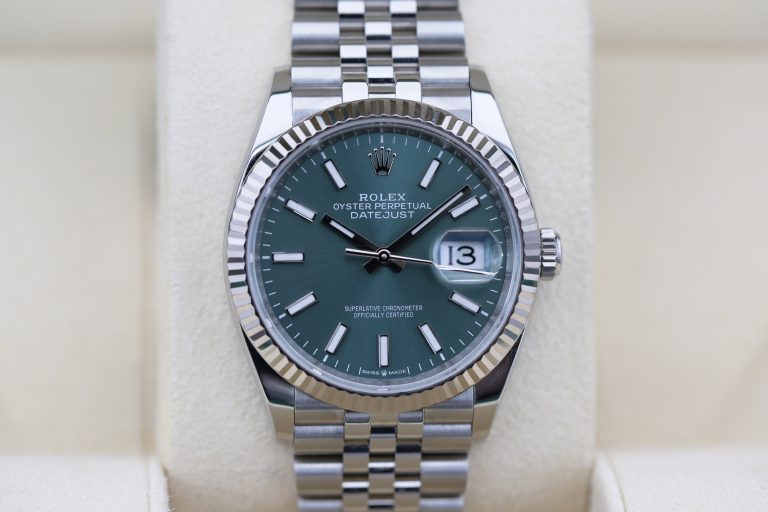
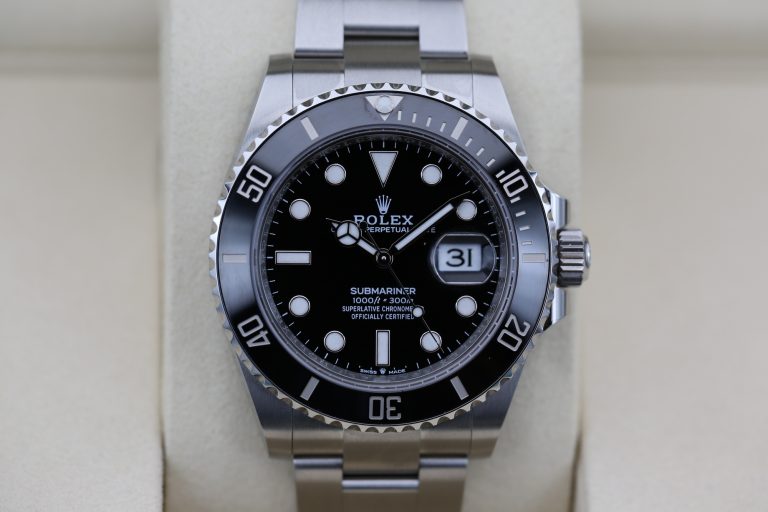
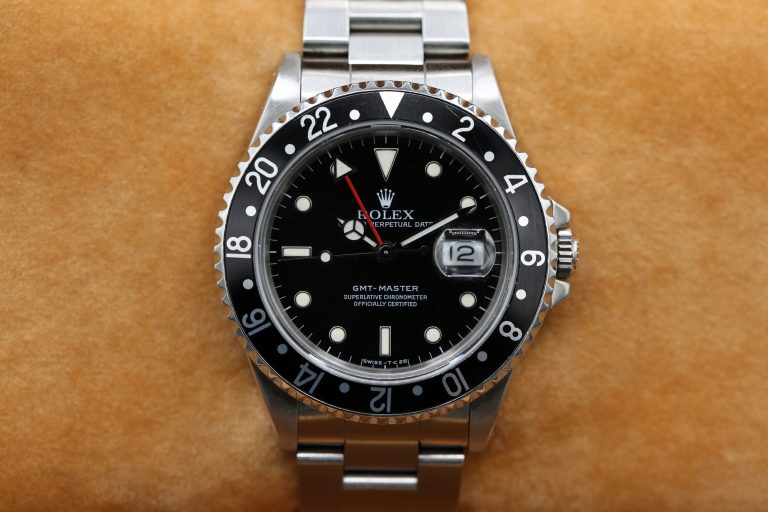
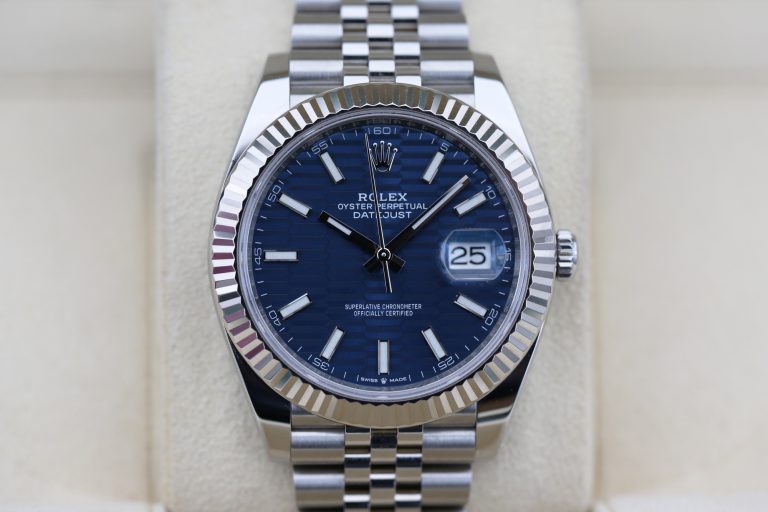
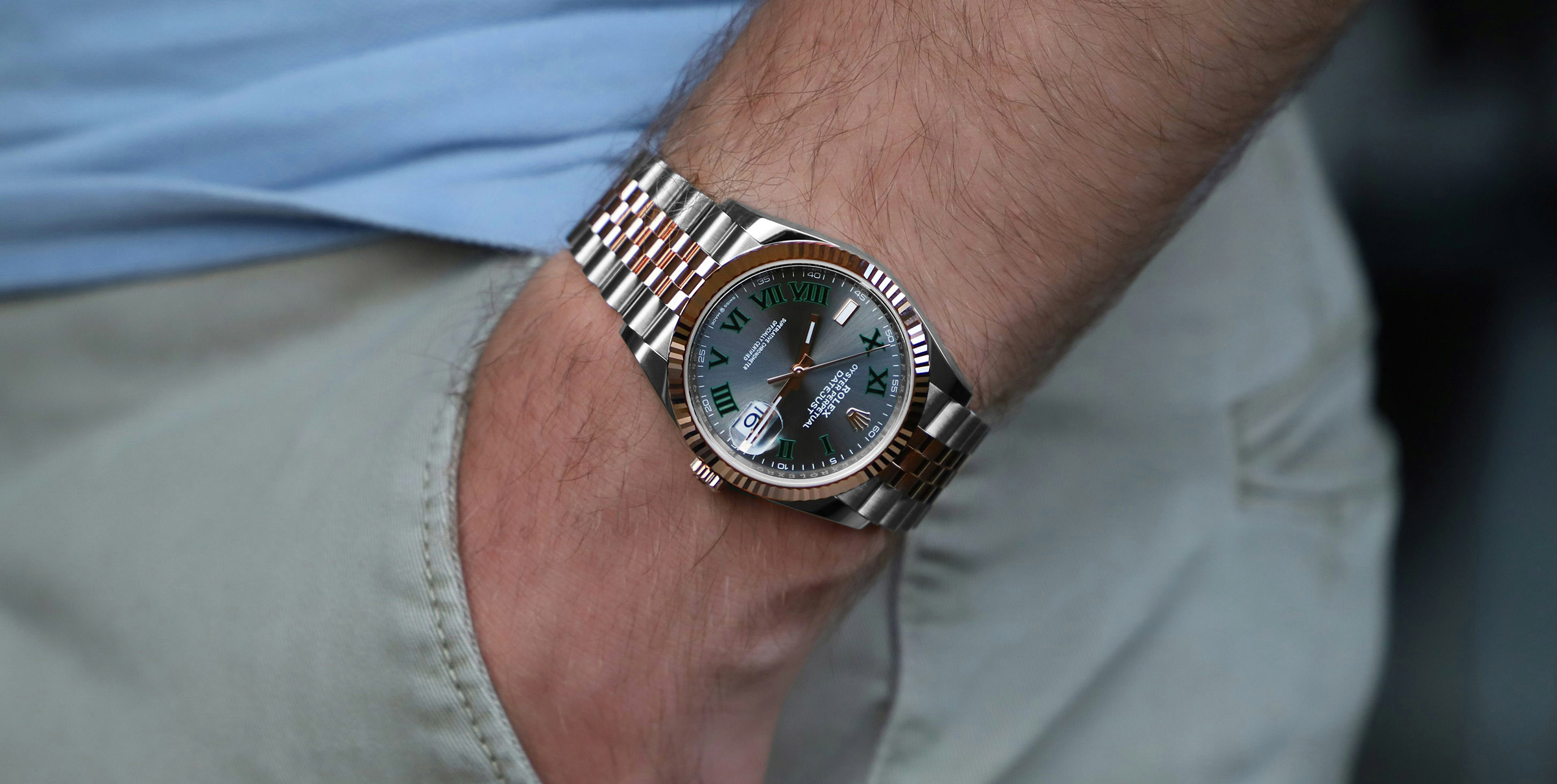
For collectors and enthusiasts Rolex watch reference numbers are more than just catalog codes as they serve as a window into a watch’s identity revealing the model family, materials, bezel style, production era and often its collectability. Reference numbers help accurately identify Rolex models and their variations. Whether you’re new to Rolex or a seasoned expert, learning to decode these numbers is essential to understanding and appreciating the world’s most recognised luxury watch brand.
The Evolution of Rolex Watch Reference Numbers
- Early years (1920s–1940s): Rolex’s first Oyster cases and “Bubbleback” models carried simple three or four digit references used mainly for internal identification, with little systematic meaning. For example, many early vintage Rolexes like the Bubblebacks were known by 4 digit references that do not encode specific features in the way modern references do. In this era, reference numbers were short and not yet part of a formal scheme.
- The golden age (1950s–1970s): As Rolex launched iconic sports watches, the Submariner (1953), GMT-Master (1955), Daytona (1963), etc., four-digit references became standard. These include classics like the Submariner ref. 5513 (introduced 1962) and the GMT-Master ref. 1675 (introduced 1959). During this period, a given reference often spanned many years with incremental changes. For instance, Rolex produced the no-date Submariner ref. 5513 from 1962 through 1989, making it one of the longest-running Rolex references . The GMT-Master ref. 1675 similarly remained in production for two decades (c.1959–1980) . These 4-digit references identified the model but did not explicitly encode details like metal or bezel type, any special features were usually documented elsewhere (e.g. dial variations like the “Paul Newman” Daytona dial had no separate reference number).
- Expansion to 5 digits (late 1970s–1990s): In the late 1970s Rolex expanded to five-digit reference numbers . This allowed for more variations as the catalog grew. Five-digit refs were used roughly from the late 1970s until 1999 . Many beloved models of the 1980s–90s carry 5-digit numbers (e.g. Submariner Date 16610, GMT-Master II 16710, Datejust 16233). The extra digit gave Rolex flexibility to denote upgrades or differences (such as the switch to sapphire crystals or new movements). For example, the Submariner Date ref. 1680 (4-digit) was updated to ref. 16800 (5-digit) around 1978, which introduced a quickset movement and sapphire crystal, marking a transitional reference that bridged vintage and modern features . Overall, the 5-digit era captured the growth and modernization of Rolex lines through the 1980s and 1990s.
- Modern 6-digit era (2000s–present): Since about 2000, Rolex has used six-digit reference numbers for new models . The six-digit format often encodes more specific details such as bezel type and uses letters for bezel or dial colors. In many cases, Rolex simply prefixed a “1” or “2” to the preceding 5-digit reference when updating a model, for example, the Explorer II ref. 16570 was replaced by ref. 216570 (adding a leading 2) in 2011 . By 2020, some references even began with “12” (e.g. Submariner 126610) to indicate the latest generation. The move to 6 digits coincided with the era of Cerachrom (ceramic) bezels, updated movements and other technical enhancements. These references often have a two-letter suffix as well, indicating bezel style or dial details (more on this below). Examples include the Submariner 126610LN, Daytona 116500LN and GMT-Master II 126710BLRO, all six digits plus letters. Today’s 6-digit references, sometimes with letters appended, allow Rolex to denote a watch’s configuration with great precision.
How to Decode Rolex Watch Reference Numbers
A modern Rolex reference number can be “read” as a code that breaks down into parts. Learning this code lets collectors quickly identify a watch’s model, material and other key traits . Here’s how it works:
- Model family digits: The first portion of the reference (the first 3–4 digits) identifies the model line or family. For six-digit references, typically the first four digits correspond to the model or series . For example, “126610” signifies a Submariner Date. In this case, the code “1266” indicates the Submariner Date family . In five-digit references, the first three digits usually denote the model (e.g. 16610 also indicates a Submariner Date, where “166” points to Submariner Date) . Each Rolex collection has its own number range. For instance, references starting in 1165 or 1265 are Daytonas , 167 and 1267 are GMT-Masters , 1140/1240 are Submariner (No-Date) , 1162/1262 are Datejust 36mm and so on. Rolex has never publicly published an official list, but enthusiasts have charted these patterns over time . Knowing the model code helps you immediately tell, for example, that a ref. 214270 is an Explorer I (since 2142 is used for Explorer) , or that 228235 is a Day-Date 40 (2282/2283 are Day-Date 40 models) . In short: the beginning of the reference tells you which Rolex model you’re looking at.
- Bezel or case code (fifth digit): In many modern references, the second-to-last digit (the fifth digit in a six-digit reference) provides information about the bezel or case style . This is a feature that became standardised in the 5-digit and 6-digit era. Common bezel codes include: 0 = smooth, polished bezel ; 1 = rotating bezel (found on many sports models) ; 2 = engine-turned or engraved bezel (e.g. older Datejust engine-turned bezels, or engraved tachymeter bezels on Daytonas) ; 3 = fluted bezel (the classic Rolex fluted bezel, usually gold) ; 4 = bezel set with diamonds or gems (or the rare vintage “bark” texture bezel) ; 6 = additional rotating bezel variant (historically used for certain models like the Turn-O-Graph) ; 7 = “various” or other cases (used for unique cases like the Explorer II, which has a fixed 24h marked bezel) . (Note: Rolex currently doesn’t use the digits 5, 8, or 9 in this bezel position, these were used in the past for now-discontinued styles like the engine-turned pyramid bezel (5) or others .)
- Example: In the reference 126334, the “3” in the fifth position indicates a fluted bezel (and indeed ref. 126334 is a Datejust 41 with white gold fluted bezel). In 116520, the “2” as fifth digit indicates an engraved metal bezel (appropriate for a pre-ceramic Daytona). Not all references strictly followed this scheme historically, but it holds for most modern Rolex watches.
- Material code (last digit): The final digit of the reference number reveals the material of the watch, specifically the case material and for all-metal bracelets it also implies the bracelet material . Modern six-digit references encode the metal in this last digit (whereas older 4-digit models sometimes listed the metal code separately after a slash ). Below are the material codes Rolex uses (0–9) and what they mean :
- 0: Stainless steel (e.g. 126610LN = steel Submariner Date)
- 1: Everose Rolesor, steel and Everose (pink) gold combination . (Rolesor is Rolex’s term for two-tone.) For example, 126201 (Datejust 36 in steel/Everose) ends in 1.
- 2: Rolesium, steel and platinum combination (used mainly for Yacht-Master models with a platinum bezel). For example, Yacht-Master ref. 16622 (steel case, platinum bezel) ends in 2 .
- 3: Yellow Rolesor, steel and 18k yellow gold , the classic steel/gold two-tone. For instance, 116233 (Datejust 36 steel & yellow gold) ends in 3 .
- 4: White Rolesor, steel and 18k white gold (usually a steel watch with white gold bezel). Example: 126334 (Datejust 41 steel with white gold bezel) ends in 4 . (Note: historically “4” in older references sometimes denoted solid white gold, but in modern coding 4 means a steel case with white gold parts.)
- 5: Everose (18k rose gold alloy) or historically also gold-plated . A modern example is 126505 (Daytona in solid Everose gold) ending in 5.
- 6: Platinum. For example, 126506 (Daytona in platinum) ends in 6.
- 7: 14k yellow gold (used in vintage models; not seen in modern production) . E.g. a vintage 14k Datejust might have a reference ending in 7.
- 8: 18k yellow gold . Many modern yellow gold models end in 8 (e.g. 118238 Day-Date in 18k yellow gold ends in 8).
- 9: 18k white gold . For instance, 116509 (Cosmograph Daytona in white gold) ends in 9.
- In summary, the last digit tells you the watch’s metal: steel (0), two-tone combo (1–4 depending on type of gold/platinum), or solid gold/platinum (5,6,8,9). This is invaluable for authentication, e.g. if someone claims a watch is solid gold but its reference ends in 0 (steel), something is amiss.
- Letter suffixes (for bezel, dial, etc.): Many modern Rolex references include one or more letters after the numeric portion. These letters are abbreviations (usually French) that denote bezel colors, dial colors, or special features . Common Rolex suffix codes include:
- LN, Lunette Noire (French for “black bezel”) . Example: 126610LN (Submariner Date, black bezel) . LN is used for many models with a plain black bezel insert.
- LV, Lunette Verte (“green bezel”) . Example: 126610LV (Submariner Date with green bezel; nicknamed “Starbucks” by collectors). Earlier, 16610LV was the 50th anniversary Submariner with a green bezel (“Kermit”).
- LB, Lunette Bleue (“blue bezel”) . Example: 126613LB (Submariner Date two-tone with blue bezel) . Also seen on blue-bezel white gold Submariners (e.g. 126619LB).
- BLRO, Bleu/Rouge (“blue/red” bezel) . Indicates the iconic “Pepsi” bezel split between blue and red on GMT-Master models . Example: 126710BLRO (GMT-Master II with red and blue bezel).
- BLNR, Bleu/Noir (“blue/black” bezel) . The popular “Batman” or “Batgirl” GMT-Master II bezel. Example: 126710BLNR (GMT-Master II with blue/black bezel).
- CHNR, Chocolat/Noir (“brown/black” bezel) . Used for the “Root Beer” GMT-Master II bezel (brown and black). Example: 126711CHNR (two-tone Everose GMT with brown/black bezel).
- GV, Glace Verte (“green glass”) . Uniquely used for the Milgauss with green-tinted sapphire crystal (e.g. 116400GV Milgauss). Here the letters refer to the crystal rather than bezel.
- GRNR, Gris/Noir (“grey/black” bezel). Used on the two-tone GMT-Master II introduced in 2023 with a dark grey and black ceramic bezel (ref. 126713GRNR) .
- RNBW, Rainbow (multi-color gemstone bezel) . Seen on special gem-set models like the Rainbow Daytona.
- SARU, SANR, SABR, etc.: These indicate specific gem-set bezels: e.g. SARU = Saphirs Rubis (sapphires and rubies) , SANR = Saphirs Noirs (black sapphires and diamonds) , SABR = Saphirs Brillants (sapphires and diamonds) , etc. Such codes appear on high-end jeweled references (e.g. GMT-Master II 116759SANR).
- The letters can be very helpful in identifying a watch’s configuration at a glance. For instance, a collector seeing a listing for a GMT “126710BLNR” will immediately know it’s the latest steel GMT-Master II with a blue/black bezel (Batman). These letter codes are derived from French because Rolex, being a Geneva-based company, uses French as its official language for nomenclature . Knowing a few color words (Bleu, Noir, Rouge, Vert, etc.) lets you decode most of them.
- Bracelet codes (older usage): In some cases, especially in past decades, Rolex would add a suffix or variant code to indicate the type of bracelet. For example, certain GMT-Master references in the 1970s–90s could be specified with Jubilee or Oyster bracelets and one might see codes like “1675/3” versus “1675/0” in literature, or an “O” or “J” suffix on paperwork, to denote the bracelet style. This practice wasn’t consistently applied in the reference number on the watch itself (often the bracelet had its own reference number). However, collectors and dealers will sometimes mention an “Oyster” (O) or “Jubilee” (J) suffix when distinguishing variants. For instance, a GMT-Master II 16710 on Jubilee might be informally called 16710J. Today, Rolex typically gives bracelets their own reference codes (not part of the watch’s reference number) and with the advent of interchangeable bracelets, such suffixes are seen less. Nonetheless, you may encounter older documents or discussions using O/J to specify bracelet types, another reminder that reference numbers tell the core watch info, while the bracelet can be separate.
Putting it together: A modern Rolex reference, therefore, encodes the model, bezel style and material, with letters for bezel/dial color. For example, take the Submariner Date 126610LN. Breaking it down: “1266” tells us it’s the latest Submariner Date model line , the “1” (fifth digit) indicates a rotating diver’s bezel , the “0” (last digit) means stainless steel and “LN” means a black bezel insert . Indeed, the 126610LN is a stainless steel Submariner Date with black rotating bezel. Once you learn these codes, reading a Rolex reference becomes second nature, you can determine a watch’s key characteristics instantly from its number.
Reference Numbers vs Serial Numbers
It’s important to distinguish a watch’s reference number from its serial number . They serve different purposes:
- Reference number, Identifies the model and its configuration. All watches of the same model/variant share the same reference number. For Rolex, the reference (model number) is typically engraved between the lugs at 12 o’clock on the case . It’s the number we’ve been decoding above.
- Serial number, A unique number identifying that specific watch. No two Rolexes have the same serial number. The serial is engraved on the case at 6 o’clock (between the lugs) on older Rolexes and on the inner rehaut (flange) for most modern Rolexes made after 2005 . The serial is used for date tracking, warranty and authenticity.
Unlike reference numbers, Rolex serial numbers historically could be used to approximate production dates. Until 2010, Rolex serialized production sequentially and often used a letter prefix system that changed over time (e.g. “R” serials in the late 1980s, “L” in 1989, “N” in 1991, “X” in 1992, all the way to “Z”, “M”, etc. in the 2000s) . Collectors developed charts correlating serial ranges or prefixes to production years, which helped in dating watches. For instance, a serial starting with “Z” was around 2006, “M” around 2007, “V” around 2008 and so on.
Since mid-2010, however, Rolex switched to “random” serials, alphanumeric strings that no longer have a chronological sequence. Modern Rolex serial numbers thus cannot be reliably used to date a watch because the coding is purposely non-sequential. Every piece gets a random code for its serial. The intent was to enhance security and eliminate the ability to pinpoint production date from the serial alone. As a result, for Rolexes made ~2010 onward, you typically use warranty papers or Rolex’s archival info to know its sale/production year rather than the serial. (Serials still serve to uniquely ID the watch and are recorded by Rolex, but they won’t tell you the year at a glance.)
In summary, the reference number tells you what the watch is, while the serial number can tell you which specific one and (for older models) approximately when it was made . Together, these numbers are vital for authentication, valuation and understanding a watch’s production period. An expert will cross-check that a watch’s reference number (model/features) makes sense for the serial number range (era), any mismatch could indicate a Frankenwatch or other issues.
Iconic Rolex Reference Numbers
Over the decades, certain Rolex reference numbers have become legendary among collectors. These iconic references often represent milestones in Rolex history and are highly sought after. Here are a few examples:
- Submariner ref. 5513 (1962–1989): The classic no-date Submariner. The 5513 had an extraordinarily long production run , evolving from gilt printing to matte dials and is seen as a cornerstone of vintage dive watch collecting. Its enduring design and ubiquity (often considered the quintessential Sub) make it a legend. James Bond even wore a Submariner on screen in the 1960s (earlier ref. 6538 and others) and while not a 5513, the model cemented the Sub’s iconic status. Collectors prize the 5513 for its clean symmetry (no date) and myriad dial variations over the years.
- GMT-Master ref. 1675 (1959–1980): The classic original GMT-Master in its longest-running form . The 1675 introduced the famous bi-color “Pepsi” bezel (red and blue) calibrated for a second time zone . With its two decades of production, the 1675 saw changes like the addition of crown guards and dial font variations, but always retained the charming acrylic crystal and luminescent Pepsi bezel. It became beloved by jet-setters and even made pop culture appearances (e.g. Magnum P.I. wore a Rolex GMT 1675). Today, a vintage 1675, especially with a faded “tropical” dial or original bezel, is a prize in any collection, representing the golden age of jet travel and Rolex’s role in it.
- Daytona ref. 6239 “Cosmograph” (1963–1969): The first Rolex Cosmograph Daytona and the reference that later earned the nickname “Paul Newman” when the actor’s own watch (a ref. 6239 with exotic dial) became famous. The 6239 was produced through most of the 1960s and was initially a slow seller (manual-wind chronographs were less popular then), but it featured the simple pump pushers and a tachymeter engraved bezel for timing races. Some came with distinctive “exotic” dials, white or black dials with Art Deco numerals on subdials, which decades later became incredibly valuable as “Paul Newman” dials . Today the ref. 6239 is a vintage grail, encapsulating the start of the Daytona saga and mid-century racing culture. Paul Newman’s own 6239 sold for a record-breaking sum in 2017, fueling further interest in this reference.
- Datejust ref. 16233 (1988–2005): A hugely successful five-digit Datejust that defined the two-tone look of the late 20th century. The 16233 is a 36mm Datejust in stainless steel with 18k yellow gold bezel and crown (yellow Rolesor), on a Jubilee bracelet, the classic two-tone Rolex dress watch. Introduced in 1988 and produced into the early 2000s , it housed Rolex’s modern caliber 3135 and a sapphire crystal. This reference became almost synonymous with the “Rolex look” for a generation: steel and gold, champagne dial, fluted bezel. While common, it remains a timeless icon for its versatility and relatively accessible price point. Many variations exist (different dials, markers), but 16233 in any configuration exudes that unmistakable Datejust prestige.
- Daytona ref. 116500LN (2016–present): The modern steel Daytona with ceramic bezel, arguably the most in-demand contemporary Rolex. Launched at Baselworld 2016, the 116500LN was the first stainless steel Daytona to feature Rolex’s black Cerachrom ceramic bezel (model code “LN”) . Collectors went wild for it, upon release it had years-long waitlists and traded for multiples of retail price. It remains extremely coveted . Coming on the heels of decades of steel Daytonas with metal bezels, the ceramic bezel plus classic white or black “panda” dial gave it a perfect blend of vintage vibe and modern tech. The reference 116500LN (2016–2023) became a legend of the modern era, illustrating how a small tweak (a bezel material) can create a frenzy in the Rolex world. (Update: In 2023 Rolex introduced a new generation Daytona, ref. 126500LN, slightly updating this model, but the 116500LN will forever be remembered as the one that caused the modern Daytona craze.)
These are just a few famous references, others include Submariner 1680 (first Sub with date), GMT-Master II 16760 “Fat Lady” (first GMT-II), Sea-Dweller 1665 “Double Red,” Explorer II 1655 “Freccione,” and many more. Collectors often refer to vintage Rolexes by their reference numbers as shorthand for the model/era, which shows how integral these codes have become in Rolex lore.
Anomalies and Exceptions in Reference Numbers
While Rolex’s reference system is systematic, there are always a few exceptions and quirks that collectors learn to recognize:
- Milgauss 116400GV: This model’s “GV” suffix stands for Glace Verte (green glass) , referring to the Milgauss’s unique green-tinted crystal. The Milgauss 116400GV is the only current Rolex with a colored crystal and Rolex highlighted it by adding GV to the reference. This is an exception because most other models use letters for bezel colors; here it’s about the crystal. (Note: there is also a Milgauss 116400 with clear crystal, no suffix.)
- Submariner 16610LV “Kermit”: Released in 2003 for the Submariner’s 50th anniversary, this was a standard Submariner Date (16610) but with a special green bezel insert. Rolex denoted it by appending LV (Lunette Verte) for the green bezel . Collectors nicknamed it the “Kermit.” It’s an anomaly in that it was a short-run anniversary variant (2003–2010) while sharing the main reference number except for the suffix. Its successor, the 116610LV (2010–2020), had a green bezel and green dial, nicknamed “Hulk”, also marked by LV. These anniversary Subs show Rolex’s convention of using suffixes for special editions rather than entirely new numbers.
- Anniversary/Commemorative Dials: In some cases, a Rolex reference might encompass multiple dial versions, including a special “anniversary” dial without changing the reference number. For example, certain Datejust references were offered with unique Jubilee anniversary dials (with repeating “ROLEX” text pattern or other motifs) but carried the same reference as the standard dial. Another example is the Day-Date models that had special dial variants for anniversaries but not distinct model numbers. These can confuse new collectors, two watches with identical reference numbers can have very different dial designs (one ordinary, one commemorative), so additional research is needed beyond the reference in such cases. Rolex typically does not change the reference for dial color or minor cosmetic differences, the reference stays the same as long as the case, movement and materials are the same. Thus, an anniversary edition may be an “internal” variant of a reference rather than a new ref. number.
- Out-of-sequence references: Occasionally, Rolex releases a model that doesn’t seem to follow the strict numbering pattern. For instance, the Yacht-Master II debuted with reference 116680 (steel) and 116688 (gold), even though “68” or “69” hadn’t been used in that way before, the Yacht-Master II being a unique model caused a unique code. Another example: the new Rolex “1908” model (released 2023 to replace Cellini) uses a 4-digit reference (525XX) which harkens to classic model codes, showing Rolex can still surprise us.
- Reused Numbers: Rolex has occasionally reused a reference number for a very different watch decades apart, which can cause confusion. A notable case: ref. 116264 was used for a Turn-O-Graph Datejust in the 2000s, but “11626x” is now also in use for some newer Datejust 36 models not Turn-O-Graph. Similarly, Rolex’s new 5-digit references in the ‘80s sometimes recycled older 4-digit codes with a “1” in front. This isn’t common, but it means context is everything, always consider the era. A vintage “ref. 2765” might have nothing in common with a modern “276500” aside from a coincidental number overlap.
While the reference system provides a strong roadmap, it’s not without a few odd detours. Enthusiasts enjoy these exceptions, they often indicate limited editions, special features, or interesting historical footnotes.
Quick Reference Tables
To help you quickly decode Rolex references, below are two tables summarizing common material codes and common bezel/color suffix codes found in reference numbers:
Common Case/Material Codes (last digit of reference)
| Digit | Material (Case & Bracelet) | Example Reference |
| 0 | Stainless Steel (904L “Oystersteel”) | 126610LN (Submariner Date in steel) |
| 1 | Everose Rolesor (steel + Everose gold) | 126201 (Datejust 36 steel/Everose) |
| 2 | Rolesium (steel + platinum accents) | 16622 (Yacht-Master steel with platinum bezel) |
| 3 | Yellow Rolesor (steel + 18k yellow gold) | 126333 (Datejust 41 steel/yellow gold) |
| 4 | White Rolesor (steel + 18k white gold) | 126234 (Datejust 36 steel with white gold bezel) |
| 5 | Everose Gold (18k rose gold) | 126505 (Daytona in solid Everose) |
| 6 | Platinum | 126506 (Daytona in platinum) |
| 8 | 18k Yellow Gold | 116508 (Daytona in yellow gold) |
| 9 | 18k White Gold | 116509 (Daytona in white gold) |
Note: Code 7 (14k gold) is omitted from modern references but can be found in some vintage models. Two-tone models are designated by codes 1–4 depending on the type of gold; all-steel is 0 and all-platinum is 6. The example references above illustrate each material code in use . For instance, ref. 126234 is a steel Datejust with white gold bezel (code 4) , while 126333 is steel and yellow gold (code 3).
Common Bezel/Colour Suffix Codes (letters after reference)
| Code | Meaning (French → English) | Model Example |
| LN | Lunette Noire, Black bezel | 126610LN (Submariner Date, black bezel) |
| LV | Lunette Verte, Green bezel | 16610LV (“Kermit” Submariner, green bezel) |
| LB | Lunette Bleue, Blue bezel | 126613LB (Submariner Date two-tone, blue bezel) |
| BLRO | Bleu/Rouge, Blue/Red bezel | 126710BLRO (GMT-Master II “Pepsi”) |
| BLNR | Bleu/Noir, Blue/Black bezel | 126710BLNR (GMT-Master II “Batman”) |
| CHNR | Chocolat/Noir, Brown/Black bezel | 126711CHNR (GMT-Master II “Root Beer”) |
| GV | Glace Verte, Green crystal | 116400GV (Milgauss with green sapphire) |
| GRNR | Gris/Noir, Gray/Black bezel | 126713GRNR (GMT-Master II two-tone, grey/black bezel) |
These are among the most frequently encountered suffixes. They help distinguish variants at a glance, e.g. a Submariner 126610LV versus 126610LN differ only in the bezel color (green vs black). Remember, the abbreviations are in French (Rolex’s official language), so LN = noir (black), BL = bleu (blue), R = rouge (red), V = vert (green), etc. .
Why Reference Numbers Matter for Collectors
Decoding and understanding Rolex reference numbers brings several practical benefits for collectors:
- Authentication: The reference number is a vital clue to confirming a Rolex’s authenticity and configuration. By knowing the correct reference for a given model/variation, you can spot mismatches or frankenwatches. For example, if you see a Submariner with a sapphire crystal but a 4-digit reference (which should correspond to acrylic crystal era), that’s a red flag. Or if a seller claims a watch is a two-tone Submariner but the reference number ends in 0 (stainless steel), you know the parts might be swapped. Cross-checking the reference against the watch’s features (dial, bezel, metal) is one of the quickest ways to vet a Rolex. Collectors also verify that the reference on the papers matches the engraving on the watch, a mismatch could indicate the watch case was swapped or the papers don’t belong to that watch.
- Tracking market values: Different references can command very different prices, even if the watches look similar. Collectors therefore pay close attention to reference numbers when tracking values and investment potential. For instance, a GMT-Master II 126710BLRO (the “Pepsi” bezel on Jubilee bracelet) often carries a higher market premium than the 126710BLNR (“Batman” blue/black bezel) simply because the Pepsi is slightly more in demand. Similarly, an older Submariner 1680 (the first Sub Date from the ’70s) is worth more than a later 16610 from the ’90s, due to rarity and vintage appeal. In some cases, a minor reference difference means a big value difference, consider the Sea-Dweller 1665: the variant with double red dial text (“Double Red Sea-Dweller”) is vastly more valuable than the later 1665 Great White (which lacks red text), even though the reference is technically the same number! Thus, knowing references and their subtle distinctions helps collectors understand pricing in the market. When buying or selling, referencing the exact number ensures both parties are clear on the exact model (for example, a “Zenith” Daytona 16520 vs. an in-house 116520, one will cost more due to collector preference).
- Understanding production history: References are essentially signposts in Rolex’s timeline. Each reference change often marks an upgrade or shift in design. By studying reference numbers, collectors gain insight into when and how a model evolved. So-called “transitional” references (often short-lived models that introduced a change) are especially significant . Examples include the Submariner 16800 (transitioned from acrylic crystal & 200m depth to sapphire & 300m, bridging vintage 1680 and modern 16610) , or the GMT-Master 16750 (transition from matte dial to gloss dial with white gold surrounds, bridging older 1675 and later sapphire 16700). These transitional pieces sometimes combined new and old features and were made only briefly, making them interesting crossover collectibles. Knowing the reference timeline helps you appreciate these evolutionary steps and spot watches that have historical significance beyond their face value. Collectors often specialize in certain eras or transitions, like accumulating all references of Submariner as it evolved.
- Identifying rarities and special variants: Certain rare or collectible Rolexes are known by their reference numbers. For instance, the Ref. 1655 Explorer II (the original Steve McQueen “Freccione”) is unique to the 1970s and was not continued, it’s a prized rare reference . The reference number is the key to searching and recognizing it. Another case: the Sea-Dweller 1665 “Double Red”, if a collector sees a Rolex listing and that reference, they immediately perk up, knowing it’s a scarce variant with two red lines of text on the dial . Similarly, the Daytona 6263 and 6265 (“Big Red” variants with large red Daytona text) are hot targets, the reference identifies the exact version. In modern times, even references that were discontinued quickly become sought-after (e.g. the 126710BLNR “Batman” on Oyster bracelet was produced only for a couple of years before Rolex switched it to Jubilee bracelet, making the Oyster variant relatively scarce by reference). By learning reference numbers, collectors can zero in on the exact iteration they want and appreciate why one reference may be rarer than another (sometimes a single digit difference means a different production period or spec).
In essence, reference numbers are a roadmap to Rolex’s history and offerings. They allow enthusiasts to speak a common language when discussing watches, ensure they are talking about the exact same model and they unlock a wealth of knowledge about what makes each reference unique. For anyone serious about collecting Rolex, becoming fluent in reference numbers is indispensable for making informed decisions and truly appreciating the nuances of each piece.
Clarifying common misconceptions
While Rolex reference numbers are highly systematic, there are a few important nuances that collectors should understand. These don’t invalidate the reference decoding structure, but they do add clarity when evaluating a watch’s full specification.
Reference digit roles vary across families
The idea that the fifth digit in a six-digit Rolex reference number always indicates bezel or case type is generally true, particularly for Datejust, Day-Date, Submariner and Yacht-Master models. However, it doesn’t universally apply across all Rolex families. For example, in the Daytona and Explorer II ranges, the fifth digit may relate more to the movement generation or other internal revisions than a specific bezel style. It’s best used as a guide rather than a hard rule.
Material isn’t always defined by the last digit alone
Although the final digit in a Rolex reference usually signals the case material, the watch’s full configuration, including bezel and bracelet, determines how Rolex categorises the metal. For instance:
- A 126334 Datejust has a stainless steel case with a white gold fluted bezel, Rolex classifies this as White Rolesor (not solid white gold).
- A 126622 Yacht-Master has a stainless steel case and platinum bezel, this is known as Rolesium, a combination not clearly expressed in the reference number alone.
This is why reference numbers should always be cross-checked with official specs or reliable dealers when confirming materials. A final digit of “4” might indicate white gold in some cases, or steel paired with a white gold bezel in others.
Bracelet suffixes like “O” and “J” are informal
Some sellers, forums and catalogues append unofficial suffixes such as:
- O for Oyster bracelet
- J for Jubilee bracelet
These are not part of Rolex’s official reference system and won’t appear on documentation or engraved on the watch itself. They’re used informally to differentiate popular variants, particularly on watches like the Datejust 36, where the same reference can be paired with multiple bracelet options. While helpful in shorthand, these suffixes should be treated as community terms, not formal identifiers.
Rolex Watch Reference Numbers in Practice at Kettle Club
At Kettle Club, we handle a wide range of Rolex references, from discontinued 4-digit vintage classics to the latest 6-digit ceramic models. We’ve internalized the reference coding system to ensure every watch we sell is exactly as described and era-correct. Some recent examples in our collection illustrate the diversity of Rolex reference numbers:
- Rolex Submariner 126610LN, The modern Submariner Date introduced in 2020. Its reference tells us it’s a steel Submariner with date and black Cerachrom bezel (LN). This model features the updated 41mm case and new Caliber 3235, marking the latest generation Submariner . It’s essentially the gold standard of dive watches today, yet it draws lineage from the ref. 16800/16610 and others before, all encoded in that reference evolution. For a collector, “126610LN” instantly conveys “current model Submariner, steel, black bezel”, a must-have for many and a core Rolex sports reference.
- Rolex Daytona 116503, A two-tone (steel and 18k yellow gold) Cosmograph Daytona chronograph. Here the reference indicates it’s from the generation of Daytonas with six digits and an engraved bezel. In fact, Rolex quietly introduced ref. 116503 in 2016 as an update to the older 116523 . The “3” at the end tells us it’s steel & yellow gold Rolesor and indeed the watch has a steel case with an 18k gold bezel, crown and center links . This model carries the racing legacy of the Daytona in a dressier two-tone package. It’s a great example of how Rolex can update a reference (523 to 503) with subtle design tweaks. At Kettle Club, we authenticate that the 116503 has all the correct attributes for that reference, the engraved gold tachymeter bezel, the champagne or white dial options, etc., so the buyer knows they have a genuine piece of Rolex racing heritage.
- Rolex Datejust 16234, A timeless 36mm Datejust from the 1990s, in stainless steel with an 18k white gold fluted bezel. The reference 16234 decodes as: 1623x = Datejust 36 and “4” at the end means White Rolesor (steel case, white gold bezel) . This reference was produced circa 1988–2005 and is the sibling of the 16233 (which had a yellow gold bezel) . The 16234 has the understated elegance of steel and white gold, often paired with a silver or blue dial for a monochromatic look. It’s a fluted bezel classic that shows how reference numbers differentiate metals: a 16233 and 16234 are identical except yellow vs. white gold trim and that one digit change (“3” to “4”) captures it. We make sure to highlight such details to clients, for example, someone after a “steel Datejust with white gold bezel” should look for ref. 16234 or the later 116234, etc. Each watch we sell is carefully authenticated and its reference/serial examined, so you can buy with confidence that the piece is exactly what the reference number indicates.
Each of these watches comes with our Kettle Club warranty and verification of all reference and serial details. Decoding the reference allowed us to verify their specifications: the 126610LN had the correct black bezel and movement for that reference; the 116503 had the updated bezel font and bracelet for its series; the 16234 had the expected sapphire crystal and calibre 3135 of that era Datejust and so on.
At Kettle Club we believe every reference tells a story. By knowing the numbers, we connect you not just with a luxury watch, but with a piece of Rolex history that suits your passion and investment goals. From the no-date Submariners of the 1960s to today’s ceramic Daytonas, reference numbers help decode the DNA of the world’s most admired watch brand. By learning how to read them, you gain a deeper understanding of your collection and you can buy, sell and collect with greater confidence. Each Rolex reference is a chapter in the brand’s evolution; we’re here to help you navigate and appreciate those chapters as you build your own collection.