
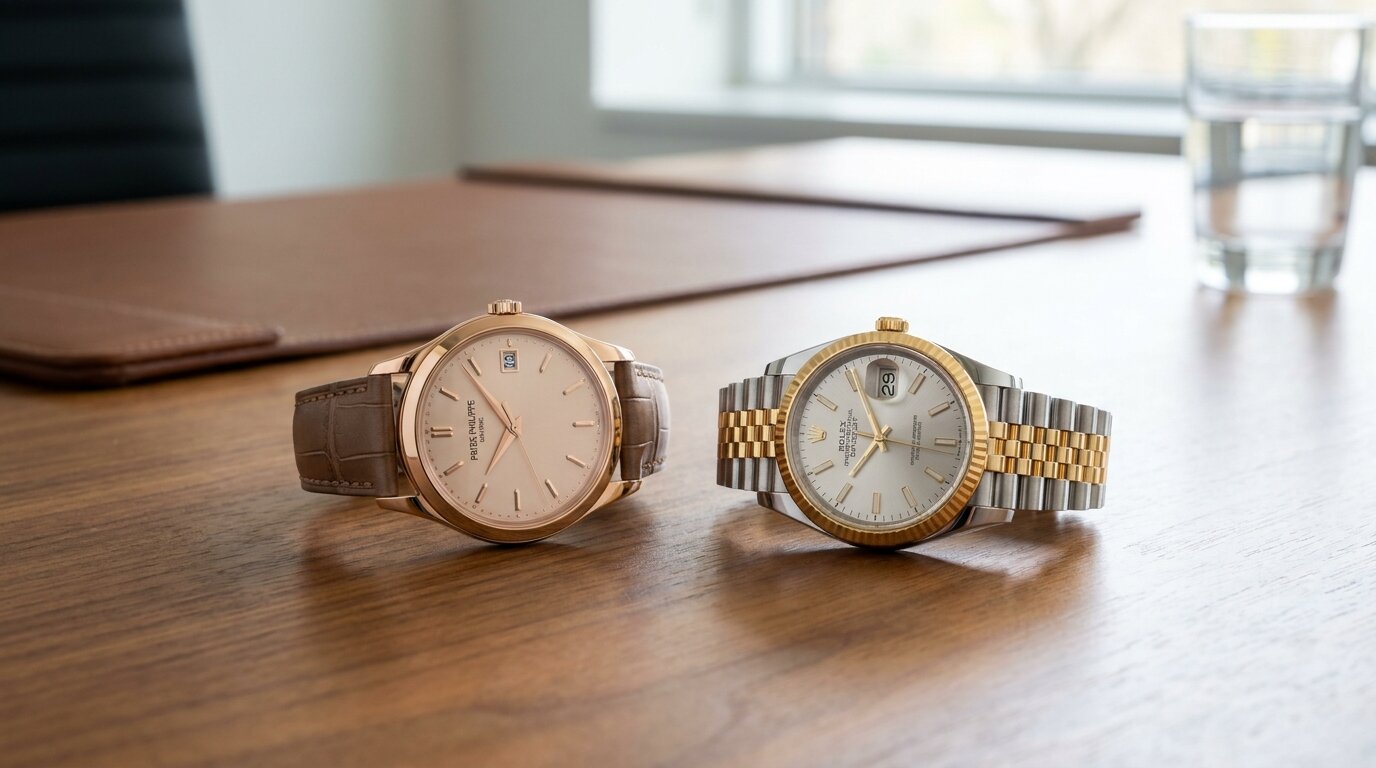
Decoding the true luxury in 2026
Type Patek Phillippe into any search bar in 2026. You’ll see obsession in real time. The conversation usually lands on Patek Philippe vs Rolex within minutes.
I sell watches in the UK for a living. I also watch clients talk themselves into a purchase they don’t need. That’s where “true luxury” gets interesting.
People think this is about precious metal. It’s more about access, restraint, finishing, service, plus what you can quietly wear in Mayfair without looking like you tried.
Start with the basics. Patek Philippe watches are built to feel private. Rolex is built to feel inevitable.
Patek Phillippe vs Rolex: what buyers actually pay in 2026
Patek Phillippe gets discussed like a grail. Rolex gets discussed like a plan. That difference changes how money moves at the till.
Patek Philippe pricing in 2026 still splits into two realities. There’s the authorised list price. There’s the price you see the moment a sports reference is “not available”.
Rolex has the same split. The gap is often smaller on regular steel pieces. The gap can still be savage on the most chased models.
If you want a clean snapshot for 2026, this is what clients are bringing to me. These are UK numbers that show up repeatedly. They shift by dial condition, full set status, plus who has the watch that week.
| Watch (UK, 2026) | Typical authorised list price | Typical secondary market range | What drives the gap |
|---|---|---|---|
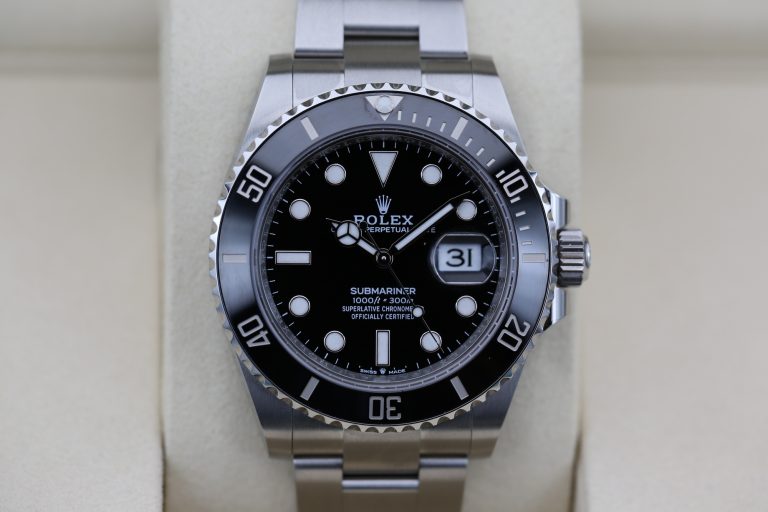
| Rolex Submariner Date (steel) | About £9,000 | About £10,000 to £13,000 | Allocation plus instant liquidity |
| Rolex Daytona (steel) | About £13,500 | About £22,000 to £32,000 | Wait lists plus hype cycles |
| Patek Philippe Aquanaut (steel) | About £23,000 | About £45,000 to £60,000 | Ultra thin supply plus collector demand |
| Patek Philippe Calatrava (gold, time only) | About £28,000 to £38,000 | About £22,000 to £35,000 | Dress watch softness in resale |
This is where Patek Phillippe can surprise newcomers. A classic Calatrava can be a value play. A steel sports reference can be a capital event.
Why Patek Phillippe still reads as old money
Patek Phillippe isn’t loud in the way people expect luxury to be loud. It’s a whisper with expensive grammar. You see it in the finishing. You see it in the case proportions.
Rolex is a status uniform. In 2026 it sits on wrists from Canary Wharf to football tunnels. That visibility isn’t a flaw. It’s the product.
With Patek, the thrill is often in what a stranger will miss. Hand finishing matters here. So does the feeling that the brand refuses to chase you.
This is also why Patek Philippe vs Rolex gets emotionally charged. One brand is permission to be seen. The other is permission to stop performing.
Patek Philippe watches: the feel on wrist when you stop reading forums
Try Patek Philippe watches in person. Do it without the sales patter. A Calatrava on leather makes sense the moment it sits under a cuff.
Patek Phillippe cases often wear thinner than their numbers suggest. The balance is deliberate. The crown action feels precise without feeling industrial.
Rolex wears like equipment. The bracelet engineering is brutally good. The clasp solutions are still the standard for daily wear in 2026.
There’s a cultural gap too. Patek feels like a private club table. Rolex feels like the bar where everyone ends up after theatre.
Patek Phillippe and the “too perfect” problem
Some clients bounce off Patek because it can feel too controlled. Every surface looks considered. Even the romance is managed.
Rolex has more swagger. A Submariner looks better with knocks. That honest wear reads as life lived.
Patek Phillippe history without the museum voice
People ask for Patek Philippe history as if it’s trivia night. It’s more useful as a clue to behaviour. The company acts like it’s guarding a tradition. That shapes supply.
Patek Phillippe has kept the tone of a family firm. The messaging leans on stewardship. The product line stays conservative even when trends beg for more noise.
Rolex history reads differently. It’s about tool credibility turned into global iconography. That story still sells in 2026. It also justifies constant demand.
If you care about Patek Philippe history, care about the after sales culture that comes with it. Service options exist. They can be slower. They can be meticulous.
What this means for modern buying
Clients who chase Patek Phillippe usually want permanence. They talk about handing down pieces. They also talk about not seeing the same watch across the restaurant.
Rolex buyers talk about reliability plus resale. They want something that works on the Tube. They also want it to hold value if life changes.
Rolex in 2026: the luxury you can wear hard
Rolex isn’t subtle. It’s also not fragile. In 2026 that matters because people actually wear their watches again.
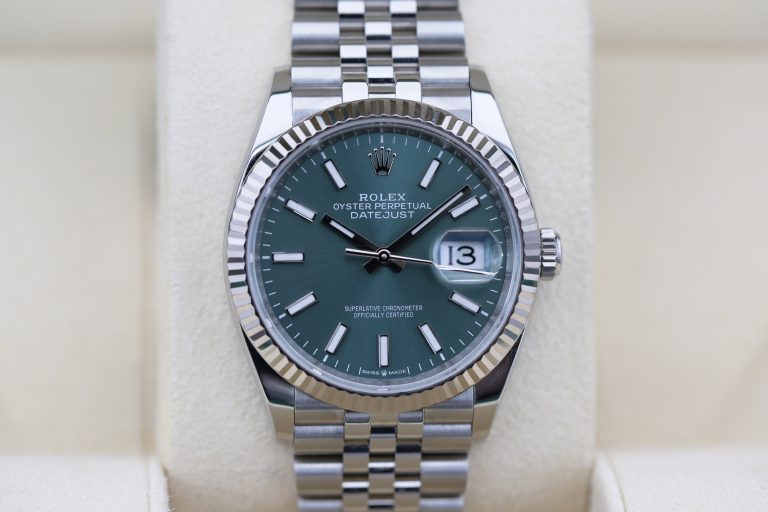
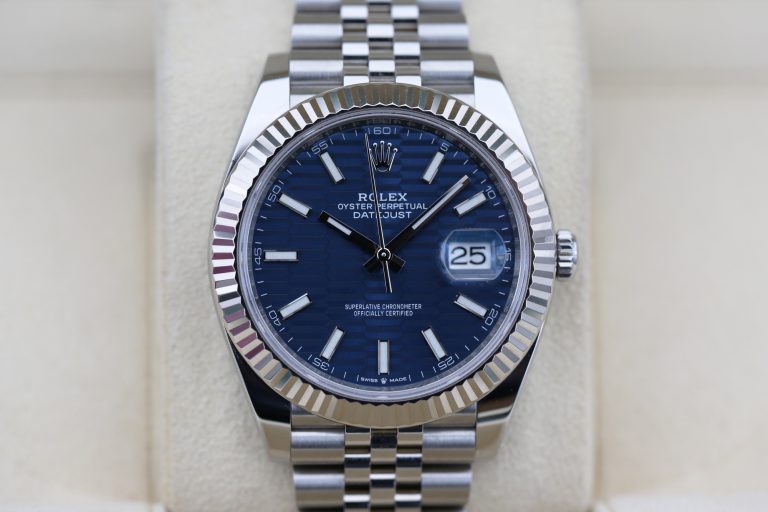
You can take a Datejust into a meeting. You can take a Submariner on holiday. It’s the easiest luxury watch decision for a busy client.
Rolex service is straightforward in the UK. Typical full services often land around £700 to £1,100 depending on model plus parts. Turnaround times can still test patience.
This is where Patek Philippe vs Rolex becomes practical. Patek servicing can run higher. I regularly see quotes around £1,500 to £4,000 depending on complication plus case work.
Collecting logic in 2026: liquidity, waiting lists, plus the grey market
Patek Phillippe isn’t bought like a microwave. Allocation matters. Relationships matter. The wait can be part of the theatre.
Rolex has its own games. Most authorised dealers still ration the hottest references. The “we will call you” line remains a British classic.
The grey market sits underneath both brands. In 2026 it’s also shaped by social media. TikTok clips can move interest overnight. Reddit threads can cool demand just as fast.
If you’re choosing between luxury watch brands, ask a hard question. Do you want the watch. Do you want the hunt. Some people confuse the two.
- How quickly do you want the watch on wrist
- Comfort with a secondary premium on steel sports pieces
- Service tolerance for cost plus waiting
- Resale plans if priorities shift in 2026
Patek Philippe pricing can punish impatience. Rolex premiums can also sting. The difference is that Rolex liquidity is usually instant.
So which is “true luxury” in 2026?
True luxury isn’t a logo. It’s freedom from compromise. That’s why Patek Phillippe wins for a certain buyer.
If you want discretion plus finishing that rewards close inspection, Patek is the play. If you want daily certainty with the strongest global recognition, Rolex remains unbeaten.
My bias as a retail editor is simple. Buy Rolex when you want a watch to live with. Buy Patek Phillippe when you want a watch to keep quiet for decades.
Either way, ignore the noise for a week. Go try them on. The wrist doesn’t lie.